
Behind the Build: Blueprint AI Product Factory
Every new internal product idea used to start from a blank page — a new brand, a new UI kit, a new prototype, weeks of setup before we even knew if it was worth pursuing.
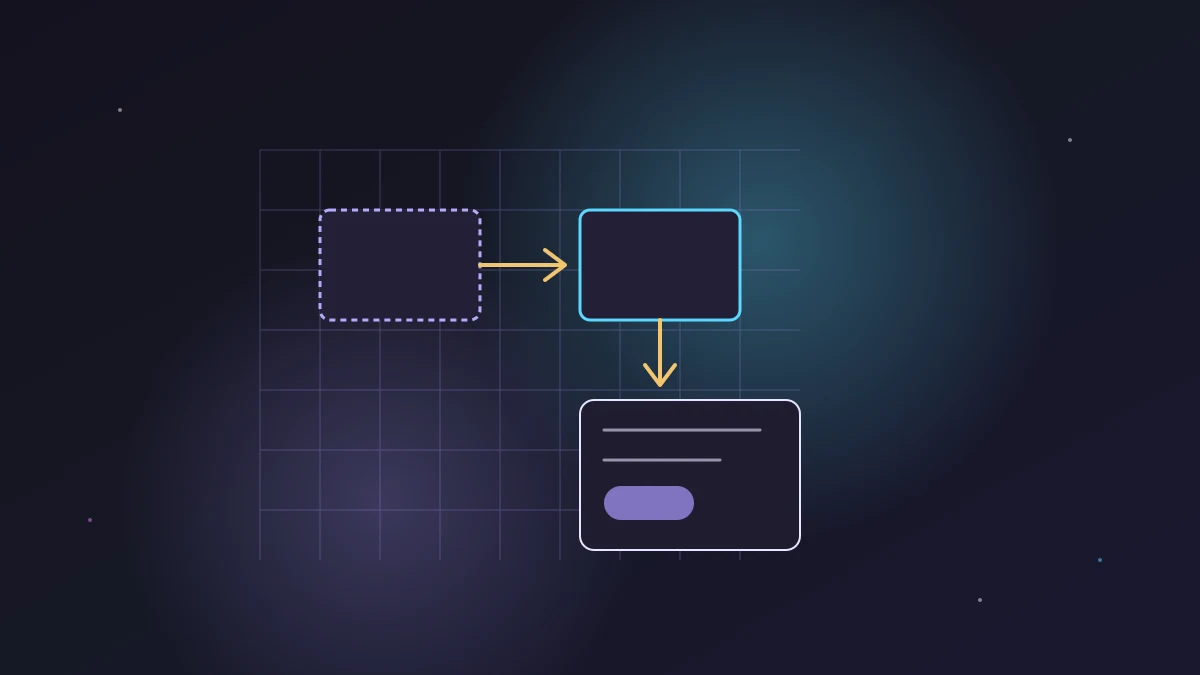
Internally, we kept hitting the same bottleneck: a promising idea would show up, and before anyone could tell if it was actually worth building, someone had to spend weeks standing up a brand direction, a UI kit, and a clickable prototype just to evaluate it. That setup cost was killing ideas that never got a fair shot. Blueprint AI Product Factory exists to remove it.
The problem: every idea started from zero
A new concept meant a new brand direction, a new UI kit, and a new prototype — every time, from scratch. None of that work was actually novel; it was the same setup steps repeating on every project, just dressed up differently. That repetition was the signal that this was an automation problem, not a creativity problem.
Mapping the repeatable steps first
Before writing a line of pipeline code, we audited a dozen past internal product launches to find exactly which parts of brand, UI, and prototyping work repeated every single time versus which parts genuinely needed fresh human judgment. That audit became the actual spec for what to automate — and, just as importantly, what not to.
Designing the generation pipeline
The pipeline chains three stages — brief intake, brand direction generation, and UI scaffolding — into one automated workflow, with a human review checkpoint built into each stage rather than only at the very end. That mirrors the same principle we recommend to clients evaluating AI automation for their own operations: draft with AI, review with a person, at every checkpoint that matters.
Tip
Build review checkpoints into every stage of a pipeline, not just the final output — catching a bad brand direction before it flows into UI generation is far cheaper than catching it after the whole prototype is built.
Building the prototype engine
The generated UI kit wires directly into a working Next.js scaffold, which is what turns this from a moodboard generator into an actual product factory — a brief becomes a clickable prototype someone can navigate the same day, not a set of static mockups that still require weeks of engineering before anyone can click through them.
Rolling it out to the team and iterating on real usage
We shipped the tool to the internal team early and deliberately incomplete, then refined the prompts and templates against how people actually used it rather than a single polished demo scenario. Real usage surfaced gaps a demo never would have — cases where the generated brand direction was technically fine but never felt like a genuine starting point for the specific idea in front of a person.
What changed once it was live
Concepts now go from a written brief to a clickable prototype in days instead of the weeks it used to take to stand up a new project. Every generated prototype inherits the same design system, so early concepts already look and feel like a real product from day one instead of a rough placeholder. It's now the default first step for any new internal concept before it earns a dedicated design pass.
What's next for the pipeline
The next iteration focuses on tightening the review checkpoints further and extending the same generation approach to client-facing early-stage concepting — the same problem exists there, just with different constraints and stakeholders in the review loop.
FAQs
- What does Blueprint AI Product Factory actually generate?
- A starting brand direction, a UI kit built on our existing design system, and a working clickable Next.js prototype — from a short written brief, with human review built into each stage.
- Does this replace the design team's judgment?
- No — it removes the blank-page setup cost, not the judgment. Every generated output goes through a human review checkpoint before it moves forward, the same principle we apply to any AI automation work.
- How long did the pipeline take to build?
- About eight weeks, starting with an audit of past product launches to identify exactly which steps were genuinely repeatable before any pipeline code was written.
- Can something like this work for client projects, not just internal ones?
- Yes, with adjusted review checkpoints for client stakeholders — it's the direction we're actively extending the pipeline toward. If you're curious what this would look like for your team, see AI Automation & Creative Solutions.
Curious what this could look like for your team?
We'll walk you through how the pipeline works and where something similar could remove real setup time from your own process.
Related case study
 AI
AIBlueprint AI Product Factory
2026An internal product-generation platform that turns a brief into brand, UI and a working prototype in days, not months.
- Next.js
- TypeScript
- OpenAI API
Related services
Brand Strategy & Identity
We define who you are before we decide how you look. Positioning, naming and a visual identity system built to hold up from a favicon to a billboard.
- Brand strategy
- Logo & identity system
- Guidelines
- Asset kit
UI / UX Design
We design interfaces against real user tasks, not just screens. Flows get mapped and friction gets tested, so you're left with a design system your team can keep building on.
- User flows
- Wireframes
- Hi-fi UI
- Design system
AI Automation & Creative Solutions
We weave AI in where it actually earns its place — automated workflows, generative content pipelines, and product features that save real hours. Not AI for its own sake.
- Workflow automation
- AI integration
- Content systems
- Custom tooling
More from the blog
 AI
AIAI Automation for Small Businesses: Where to Start
AI automation doesn't have to mean a chatbot bolted onto your homepage or a six-figure platform overhaul. Here's a practical, low-risk way to actually start.
Read the article AI
AIHow AI Can Eliminate Hours of Administrative Work
Administrative work quietly eats hours every week in almost every small business. Here's how AI realistically removes it — with the guardrails that keep it safe.
Read the article Case Study
How We Built GarageLeague
Weekend league organizers were running schedules, standings, and rosters out of spreadsheets and group chats — until one reschedule broke the whole system. Here's how we fixed that.
Read the article